What's new

Need working out recipe for a cookie I bought (1 Viewer)

makern

New Member
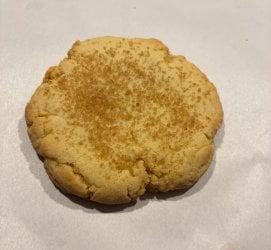
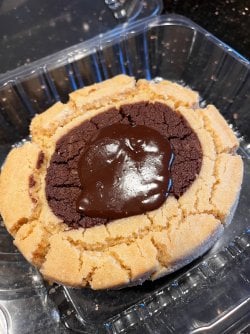
I live on the East Coast. Lots of diners. In almost all of these restaurants they sell these oversized cookies (see pic). They are about 6" in diameter and probably ½"-¾" thick. The pic shows a two-tone cookie but I'm just looking for a basic recipe for the non-chocolate part.
The cookie itself reminds me of shortbread just not as buttery. The top surface is cracked. It's kind of sandy, very slightly salty, not too sweet, and somewhat dry. The cookie crumbles when you break it but they are big crumbles. Sometimes the top of the cookie is covered with chocolate chips. other times it could be a dollop of hardened ganache, and other times it's just plain.
I've been trying various recipes but cannot seem to get the right combination. I believe the ratio could be about 3 cups flour : 16-20 Tbsp butter (cold, cubed) : ¾-1 cups sugar. originally i added an egg + yolk but that made them a more dense, sugar cookie-like. Maybe don't add any egg just 1 yolk? I tried much less butter and they tasted like and had the consistency of biscuits. I've been coating the tops of my test refrigerated dough with sugar (and then sugar + corn starch) but the cracks shown in the pic aren't happening.

I'm moving out of this area soon and won't be able to get these anymore. I want to be able to make them myself. Any help would be gratefully appreciated.
 

Attachments

  • Diner Cookie 2.jpeg
    Diner Cookie 2.jpeg
    2.4 MB · Views: 18
Welcome to Help Me Bake @makern ;) I'm sure when Angie gets a chance, she will have some pearls of wisdom for you. In the dusty corners of my mind It made me think Chinese Cookie. Google says it's an East Coast thing, so maybe?

Jumbo Diner-Style Chinese Cookies Recipe

🛒 Ingredients

For the Cookie Base:
  • 2 cups all-purpose flour
  • ½ tsp baking soda
  • ½ tsp cream of tartar (critical for the specific diner "shattering crumb" texture)
  • ½ tsp fine salt
  • ½ cup (1 stick) unsalted butter, room temperature
  • ½ cup vegetable shortening (e.g., Crisco) – do not swap for more butter; shortening prevents excessive spreading and yields the sandy, less-fatty mouthfeel
  • ¾ cup granulated sugar
  • 1 large egg
  • 1 tsp pure almond extract (the signature flavor profile)
  • 1 tsp vanilla extract

For the Fudge Dollop Center:
  • ½ cup semisweet chocolate chips
  • 2 tbsp heavy cream or unsalted butter
  • (Alternatively: Press a large handful of semi-sweet chocolate chips onto the top before baking if making the chocolate chip variant).


🥣 Instructions

1. Mix the Dry Ingredients
In a medium bowl, whisk together the flour, baking soda, cream of tartar, and salt. Set aside.

2. Cream the Fats & Sugars
In a stand mixer fitted with the paddle attachment (or using a hand mixer), beat the butter, shortening, and granulated sugar on medium speed for about 2 to 3 minutes until smooth and combined, but not overly whipped or airy.

3. Add Wet Ingredients
Add the egg, almond extract, and vanilla extract. Beat on medium speed until fully incorporated.

4. Form the Stiff Dough
Turn the mixer to low. Gradually add the flour mixture in two additions. Mix just until the dough comes together. The dough should look relatively dense and slightly dry—this is exactly what creates those big crumbles and prevents the massive cookie from melting into a puddle in the oven.

5. Shape the 6-Inch Giants
  1. Divide the dense dough into 3 equal portions (each ball will be quite substantial, roughly the size of a large orange).
  2. Line a large baking sheet with parchment paper. Place the balls at least 3 inches apart.
  3. Using the flat palm of your hand, press each ball firmly down until it forms a uniform disk roughly 5 inches in diameter and roughly ¾-inch thick.
  4. Use your thumb or the back of a large spoon to press a shallow indentation into the exact center of each cookie, leaving a thick border. The edges will naturally crack and split beautifully as you press down.

6. Bake
  1. Chill the shaped dough disks in the refrigerator for 20 minutes before baking to lock in their height and thickness.
  2. Preheat your oven to 350°F (175°C).
  3. Bake for 16 to 20 minutes. Because these are jumbo-sized, keep an eye on them: you want the edges to be set and exceptionally pale golden brown, while the center indentation should no longer look wet.
  4. Remove from the oven and let them cool completely on the baking sheet. Do not move them while hot; they need time to structure into that sandy, dense crumb.

7. Add the Fudge Top
While the cookies are cooling, melt the chocolate chips and heavy cream together in a microwave-safe bowl in 15-second bursts, stirring until glossy and smooth. Spoon a generous, heavy dollop of the thick fudge glaze right into the center indentation of each giant cookie. Let the glaze set and harden slightly before serving.


A Guy
 
Hi @makern, welcome to the site. :)

Thanks for the post, @A Guy, but I’m not sure if that recipe will give the signature cracks makern is looking for.

With regards to your recipe, yes, keep experimenting. I know you’re aiming for a consistency similar to shortbread with the cracks of a crumble topping, so try the recipe with just one egg yolk and see how it fares. The yolk adds richness and helps create the crumbly texture you’re after, so reducing it to one yolk may adjust the recipe just enough to give you the effect you want.

I’m not sure how you’re portioning or shaping the cookies, but if you’re rolling them by hand, make sure you rough up the surface rather than smoothing them into neat balls. A smooth surface will bake smooth, whereas a rough surface encourages cracks. I find ice‑cream scoops great for this, although because you’re making larger cookies, that might not be practical. You could still roughly roll them or rough the dough up a little with a fork or knife to help get that textured effect.

Other things you could try:
  • I know you mentioned sugar and rolling in cornstarch, so try rolling the dough in granulated sugar or a coarse sugar before baking, as this will draw out moisture during baking, add more texture and, along with the cornstarch, help reduce spread, giving you the thicker cookies you’re after.
  • Bake the cookies straight from chilled so they hold their shape and crack nicely.
I do hope some of the above helps, and good luck perfecting those diner cookies.
 
I used A Guy's recipe except I took Angie's suggestion and only used 1 yolk. I have to say the taste and texture are spot on. Almondy, crumbly, just salty enough and not too buttery. But the look is kind of anemic. Sort of blobby with a few edge cracks but nothing on the surface. I didn't get the sharp edges you see in the original picture either. Mine came out slightly dome shaped.

I divided the dough in thirds (230g). I roughly balled them up trying to leave seams all around. I then placed each ball between two sheets of parchment and used a small pot to press them down into disks (about 1" thick). This caused the edges to be pretty irregular so I gently eased it back into a circular shape trying to keep the rough contour. Although pressing with the pot gave me a uniform thickness it also squashed all my seams. I refrigerated for a few hours then pulled them out to relax a bit so I could top them with Turbinado sugar. I baked them at 350F for 22 minutes. The outside was just crisp but the inside was soft (which wasn't bad).

Of course I'll need to tweak this. I think thirds might be a little to much dough for each cookie. I think my dough disk was a too thick so the insides were just a little underbaked for what I was looking for. I could have pressed them down further but the cookies would have come out 8" in diameter. I think next time I'll do quarters. That should allow me to get them a little thinner (so the bake will be better) while keeping the diameter the same.

I'm not sure about the surface cracks. Sugaring the tops didn't really do anything. Maybe next time I'll flour them as soon as I take them out of the fridge then put them right into the oven. Or maybe I drag a toothpick through the surface before baking to start the fissures. Unless someone has any other ideas about what I could top them with to facilitate that cracking look.
When I make true shortbread cookies, I go straight from the freezer to the oven and those come out with zero spread. I might have let these relax a little too long.

I make crinkle cookies (chocolate, lemon & gingerbread) and those are rolled in powdered sugar just before baking. They come out with nice big cracks all over but also with a white coating. I would prefer not to drown these in powdered sugar as I don't want them white or that sweet. I only mention this as something that has worked for me in the past.

Overall this recipe was a huge success and much better than all my previous attempts. Thanks all!
 

Attachments

  • IMG_8272.jpg
    IMG_8272.jpg
    1.8 MB · Views: 16
Aww, thanks @makern for the update and the pic! That’s fabulous that the taste and texture are spot on with the 1‑yolk tweak, being almondy and crumbly, just salty‑sweet enough, and not too buttery. But I’d still like to help you sort the cracks.

I think the blobby/domed shape and lack of surface cracks are mostly down to the shaping and the chill/bake timing (and possibly the new recipe behaving a little differently). Pressing between parchment with the pot likely squashed the seams and smoothed out the top. Add to that the 1‑inch thickness and you’ve got the perfect recipe for doming and slightly underbaked centres.

So if you want to tweak things a little more for those beautiful natural cracks and sharper edges (while staying very close to the original recipe), maybe try these:
  • Yes divide into quarters instead of thirds as this should give you the ideal 5–6 inch diameter at about ¾‑inch thickness for more even baking all the way through.
  • For shaping: Form rough, loose balls with visible seams and place them on the parchment. Gently press straight down with the palm of your hand or the bottom of a flat glass to ¾‑inch thickness. Keep the top rough and the edges irregular; avoid over‑smoothing. Then lightly drag a fork or toothpick across the surface right after pressing as this helps start those fissures and encourages the beautiful cracks.
  • Chill fully (30–60 minutes in the fridge or 20+ minutes in the freezer), then bake straight from cold with minimal relaxing time. This really helps with spread control and natural cracking.
  • Once chilled, you could brush them with a very thin/light egg‑yolk wash before topping with turbinado or granulated sugar for better colour and crack definition right before baking.
  • Skip the powdered sugar as it creates a different style of crack than the baked‑in look you’re after.
  • For even better surface cracks, maybe try a hotter start: 5 minutes at 375°F, then reduce to 350°F to finish. The cold‑to‑hot contrast sets the surface quickly so it cracks nicely as the inside expands. Check at 16–18 minutes total; the thinner cookies should have lightly golden edges and just‑set centres.
Your dough is getting very close, so maybe a few more of these small adjustments should get you much nearer to that classic diner‑style finish you're looking for. I do hope so. :)
 

Users who are viewing this thread

Back
Top